Your guide to designing a home that feels effortlessly collected
You’ve probably seen it: stark white trim, greige walls, a potpourri of accent colors. Nothing’s terrible on its own, but together it feels builder-basic.
You wouldn’t be the first homeowner to spend an afternoon overanalyzing swatches, second-guessing whether any of them work together. Decision fatigue is no stranger to the interior design process. The good news: you don’t need a lot of colors. You just need the right ones.
Coastal homes should feel effortlessly pulled together. Easy, light, natural. Which, of course, comes largely from the color and materials palette. Before furniture and finishes, we help our clients define their interior design color palette with timeless coastal hues and textures. Once that foundation is in place, everything else falls into place.
Here’s how we create interior design color schemes that feel timeless—and how you can do it, too.
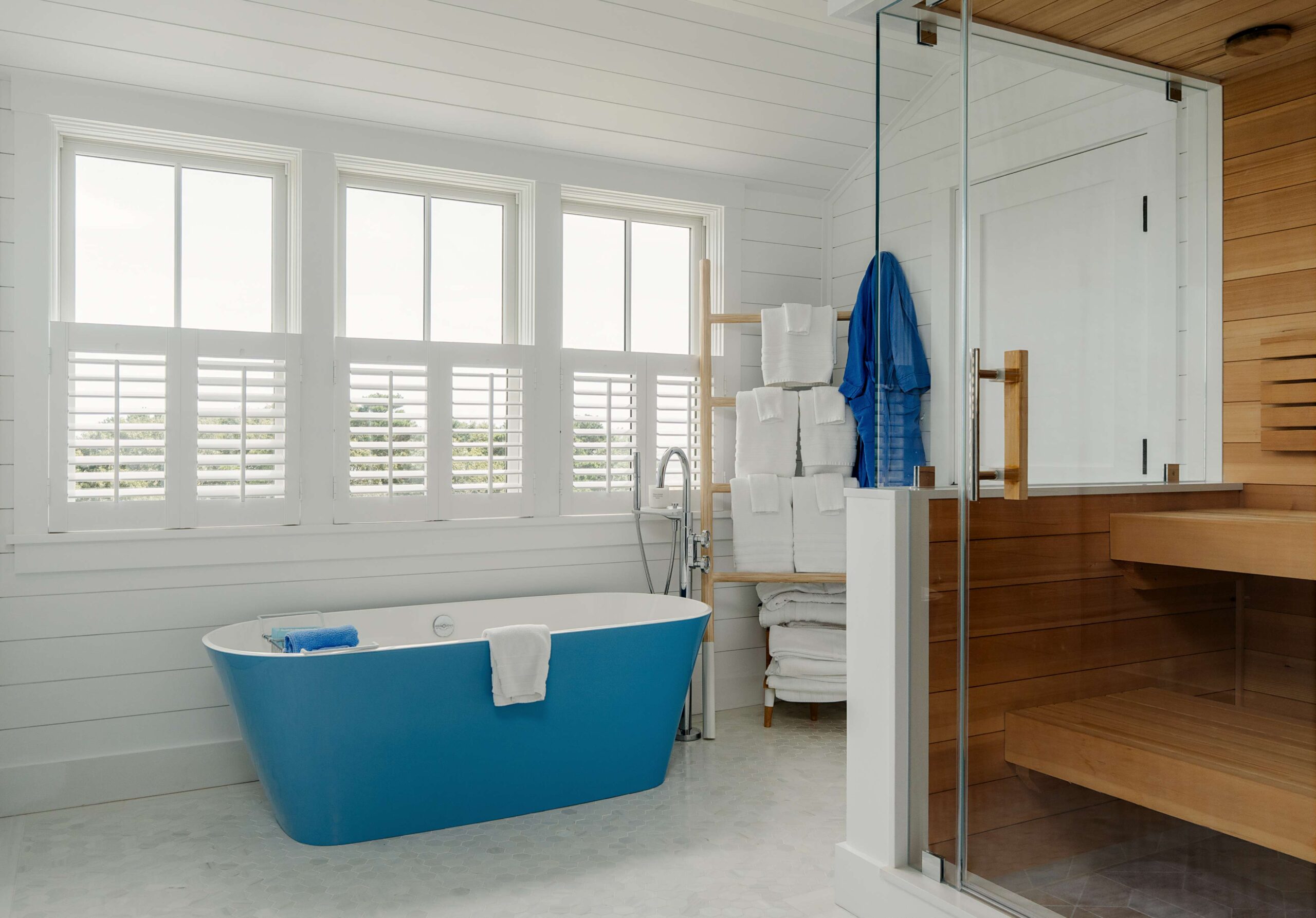
Step 1: Start With Neutral Walls and Trim
When choosing a foundation for your color palette, keep it simple. Some homes can pull off bold contrast and wild colors. But coastal interiors work best with neutral colors and subtle layering.
Start with a white foundation. It reflects light, expands the room, and provides a flexible backdrop for other design elements.
Easier said than done, right? If you’ve tried to choose between six nearly identical white swatches, you get it. Some lean blue, others yellow, and they all shift throughout the day depending on lighting and direction. The goal is to find a white that looks good with your fixed elements—like floors, countertops, cabinetry, and orientation to the sun.
Here are the paint colors we use and recommend most often:
- Benjamin Moore Chantilly Lace: A classic white that feels like fresh cotton and pure silk. This shade works beautifully in modern farmhouse and traditional coastal homes.
- Benjamin Moore White Dove: Creamy and soft with a touch of gray. A favorite for cooler, north-facing rooms.
- Sherwin-Williams Alabaster: Cozy and classic. We love this one with wood beams or warmer tones.
- Farrow & Ball All White: Crisp but not cold. Made with only white pigments, this white works well in a variety of lighting conditions.
- Farrow & Ball Wimborne White: A touch warmer than the rest. A hint of yellow makes it subtle but charming.
Once you’ve narrowed it down to a few top contenders, live with them for a couple of days. Swatch them on different walls and check them in the morning, at noon, and just before sunset—with both natural and artificial light. That “perfect” white in your entryway might look completely different in your bedroom.
Pro tip: For a designer look, use the same paint color in different finishes on your walls and trim. We recommend matte or eggshell on the walls, and satin or semi-gloss for the trim and cabinetry. This keeps it fresh, without reading flat.
Step 2: Add Depth With Coastal Accent Colors
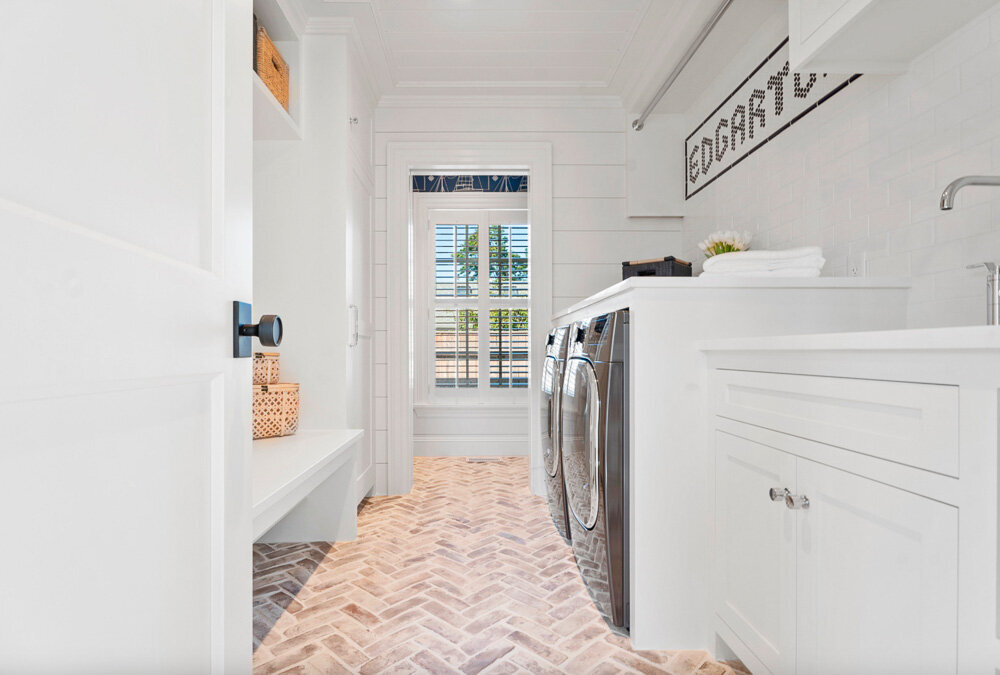
Once you select your neutral base, layer in a few accent colors to round out your coastal color palette.
Think of these as your supporting cast. Accent colors help tell the story. Stick to two or three, and repeat them throughout your home in different ways: cabinetry, art, textiles, lighting, wallpaper, and other decor.
Our favorites for a coastal farmhouse aesthetic include:
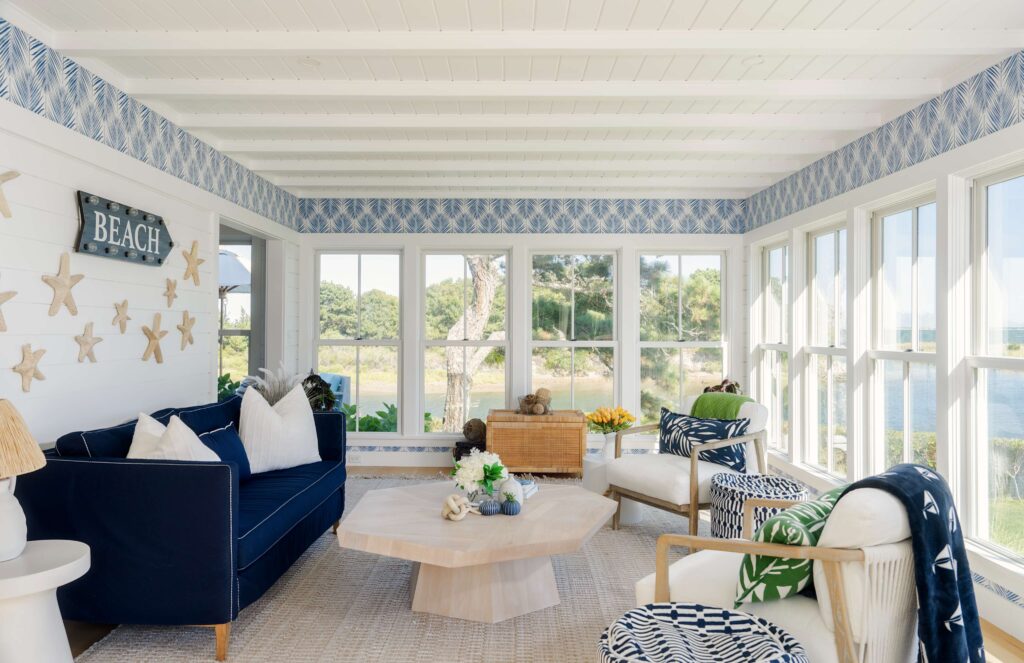
- Coastal blues: Navy, denim, slate, and stormy sky shades add depth without feeling harsh. We love these tones on bathroom vanities, kitchen islands, accent chairs, or a cozy den or movie room. Our go-to picks include: Farrow & Ball Borrowed Light, Benjamin Moore Hale Navy, and Benjamin Moore Boothbay Gray.
- Sea-glass greens: Relaxed greens like sage, eucalyptus, and sea foam feel right at home in a coastal space. Pull in hints of green through wallpaper, vintage rugs, framed art print, and house plants. We love a Serena & Lily wallpaper or palm tree tucked into a corner.
- Warm hues: A touch of coral, saffron, or terracotta can go a long way. Use these shades for artwork, throw pillows, or a painted cabinet in an otherwise neutral space.
When it comes to color, cohesion matters. Stick with a consistent undertone. If you’re starting with a cool white, pair it with cooler accent shades. If your base is warm, follow that lead.
Step 3: Layer in Texture to Ground the Space
Interior design isn’t two-dimensional. Your palette shouldn’t be either.
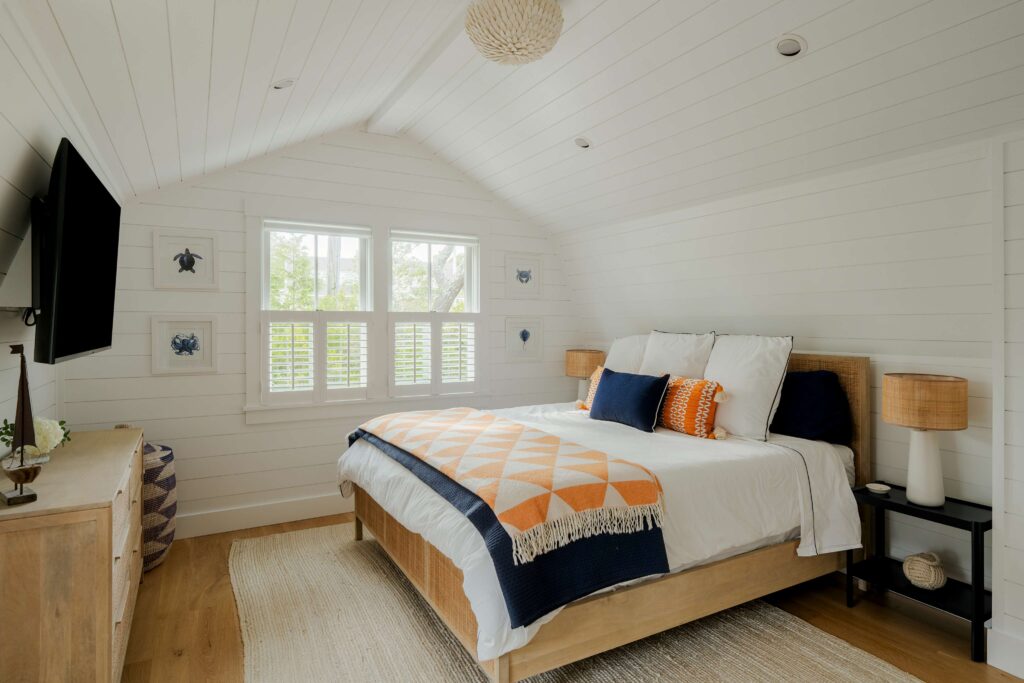
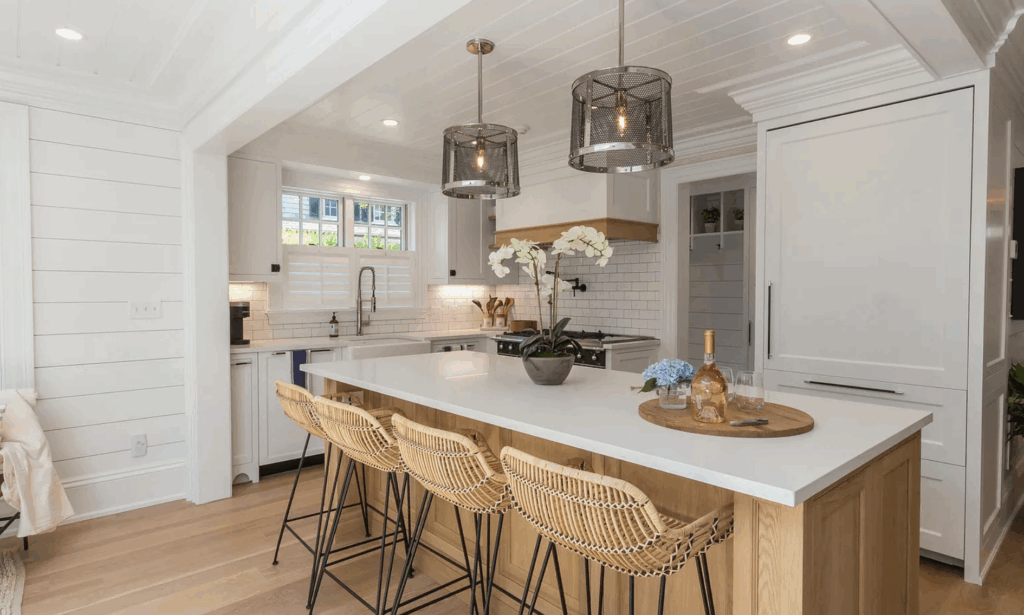
Texture adds visual interest and warmth—even in neutral spaces. Think live-edge woods, woven fibers, natural stone, and living metals. These tactile materials are the unsung heroes of layered design.
Here are a few we often reach for:
- White oak: Beautiful for floors, beams, shelving, furniture, and built-ins. Its subtle grain and tone pair effortlessly with gentle whites and dusty blues.
- Cane, rattan, raffia, and jute: Natural fibers with subtle texture and charm. Perfect for headboards, chairs, pendant lights, or a relaxed area rug. They bring an unfussy, coastal feel.
- Linen and cotton: Light, breathable fabrics that work well for drapes, Roman shades, and slipcovers. Casual and coastal in all the right ways.
- Polished nickel and unlacquered brass: Understated and timeless. We love these metals in kitchens and baths—they add just enough shimmer without stealing the show. Over time, they patina beautifully like driftwood or wave-tossed stone.
These materials act like grounding neutrals, adding richness and warmth.
Related: Make your coastal home feel intentional with these five design details →
Step 4: Let Your Palette Flow Between Rooms
Use the same core colors and materials in different ways throughout each space. The goal isn’t for every room to match, but for the whole house to feel like it belongs together. Think of each room as a different chapter of the same story.
Follow this formula to create a balanced coastal palette:
- Start with a soft white or neutral base
- Layer in two to three accent colors that show up in different ways—cabinetry, artwork, textiles
- Add texture through natural materials
- Choose two metal finishes that repeat across rooms—like brass and nickel, or black and polished chrome
Done well, this approach creates a layered, collected feel of a thoughtfully designed home. When it comes to coastal farmhouse design, less is often best.
A Final Note
When in doubt, start with color. Pick one foundation shade, build from there, and let texture and tone carry it through.
At Salty Havens, we help you design a home that looks and feels just right, down to the smallest detail. Whether you’re remodeling or managing a full build, we’ll help you select interior design paint colors, finishes, and fixtures that feel cohesive.
READ THE POST
Edgartown Jewel Box: A Coastal Classic with a Twist

READ THE POST
Inside the Village Retreat: A Coastal Home Designed for Connection

READ THE POST
Five Design Details That Make a Coastal Home Feel Intentional

read the post
How to Design a Coastal Home That Feels Collected, Not Themed

Related Posts
continue exploring
With Salty Havens, we advocate for you throughout the entire design and construction process. So you can enjoy a home built for laid-back coastal living.
Let’s bring your coastal dream home to life
Your coastal home should feel like a getaway—without the planning headaches.


inquire now →
inquire now